
Project Neofelis
Discover how one remarkable cat can help protect a whole living forest.
Target species:
Clouded leopards are hard to study and easy to overlook. Project Neofelis connects field research, local relationships and practical problem-solving to help protect these elusive cats, and make conservation workable for the people who share their forests.
Welcome to the world's largest program dedicated to the conservation and science of clouded leopards.
2017
Project Neofelis was launched
20+
Local staff & graduate researchers supported
15+
Zoo institutions supporting the program
01 / MEET THE SPECIES
Two species. One extraordinary lineage.
Clouded leopards aren’t actually leopards at all. They belong to their own genus, Neofelis: a distinct lineage of wildcats shaped by the forests of mainland Asia and the islands of Borneo and Sumatra.
Protecting these wildcats also keeps the forest connected.
Understanding and protecting connected forests for clouded leopards also helps guide conservation for the other wildlife sharing those habitats.
Named for their cloud-like markings, these forest specialists move through both trees and the forest floor. Yet across their range, we still know too little about where populations persist and how they stay connected. Forest loss, fragmentation, declining prey and illegal wildlife trade put that future at risk.

A cat on its own clock
Clouded leopards are not simply night owls. They can be active by day and by night, which is one reason that patient, around-the-clock monitoring matters.
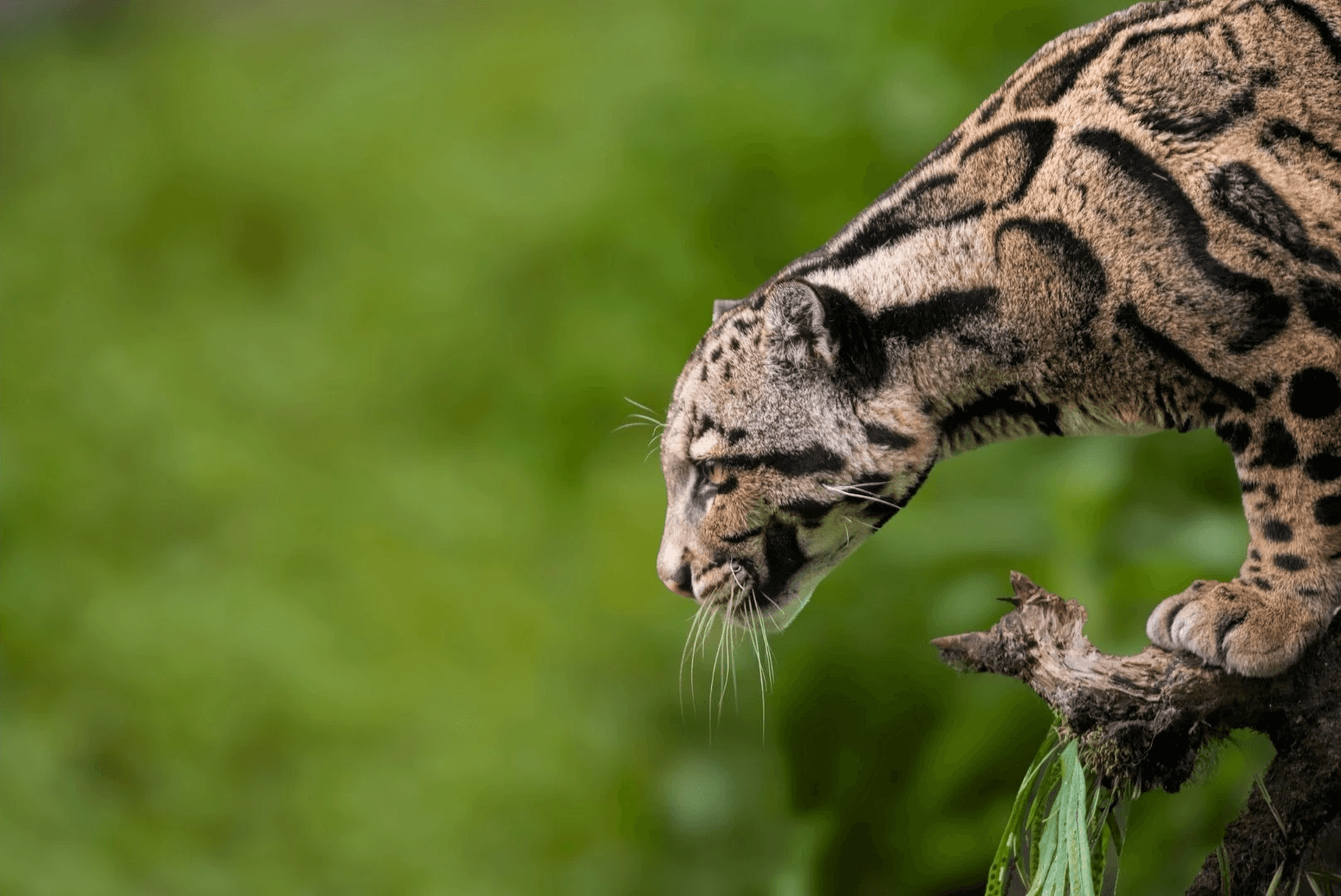
Indochinese clouded leopard
Neofelis nebulosa
This elusive cat inhabits forest landscapes across mainland South and Southeast Asia. Knowing where populations still persist is the first step toward keeping them connected.
WHAT PROTECTION TAKES
Filling gaps in population knowledge, understanding forest connections, and developing locally relevant responses to habitat loss and hunting pressure.
What you can do to help
Avoiding buying products that contain palm oil makes an impact. Palm plantations are the #1 cause of deforestation and fragmentation in many of the forests clouded leopards depend on.
WHERE THEY live
Here's a closer look at their range.

THE FOREST THEY CALL HOME
Tropical and subtropical forests, from Himalayan foothills through mainland Southeast Asia to Peninsular Malaysia.
Gold: extant · Purple: possibly extant · Red hatching: possibly extinct · Solid red: extinct.
Global Conservation reproduces this map with credit to IUCN. Map date is not stated; the linked mainland assessment is dated 2020. These categories are not a dated historic-versus-current comparison, project boundaries or live sightings.
Explore our field stations
We work across four forests connected by a shared mission.
Different landscapes need different approaches, shaped with the people who live there. Explore how field science, local relationships and practical innovation connect at our field stations to support the next relevant step.

Five landscapes. A shared purpose.
Select a region to meet its local team and explore the work.
Every landscape has a story
Where would you like to go?
Choose a region on the map to explore its landscape, local team and next goals. Different places call for different approaches, shaped by local people, field science and practical innovation.
FIELD Notes / MIZORAM, INDIA

Meet the Clouded Leopard Cottage, a community-based eco-tourism hub located in Murlen Village, directly adjacent to Murlen National Park.
Spearheaded by our program director Dr. Amit Kumar Bal, the cottage operates under a community-led conservation blueprint to support local sustainable livelihoods, turn hunters into allies, and act as a platform to keep local traditions alive while financing habitat preservation. In northeastern India, our conservation work starts with relationships.
03 / PEOPLE MAKE PROTECTION POSSIBLE
The most important connection is a human one.
The people who know these landscapes help shape what happens next. Project Neofelis supports local scientists, community partners and emerging researchers, connecting their knowledge and priorities with field evidence, training and practical conservation.

02 / EVIDENCE INTO ACTION
We've published 10 studies under Project Neofelis, and counting. Explore our research and how it connects with our work in the field.
Research helps us understand what clouded leopards need. Local knowledge helps shape what can work. Together, they guide monitoring, training, and practical conservation adapted to each landscape.

See what stays hidden
Camera traps reveal where elusive cats survive, without capturing or handling them.

Start with local knowledge
Understanding people’s views is essential when considering a clouded leopard return to Taiwan.

Connect the forest
Wildlife records and landscape models help identify potential pathways between remaining forests.

Protection that goes deeper
A broader look at clouded leopard biology brings their conservation needs into focus.
Go beyond the headline
Explore more of our work and learn about the science behind Project Neofelis and S.P.E.C.I.E.S.
05 / INVEST IN THE PEOPLE WHO STAY
Meet the team leading the way
A local conservationist can help protect a landscape for years. Meet the people, explore their goals and help sustain the expertise and community relationships that make lasting progress possible.

ResearchGate
Google Scholar
Conservation practitioner for Project Neofelis, saving threatened felids along the Indo-Burma region.
Salary funded · figures awaiting confirmation

ResearchGate
Google Scholar
A former S.P.E.C.I.E.S. fellow, Inda studied how oil-palm landscapes affect clouded leopard movement. The Sumatra proposal would support her leadership and create an opportunity to mentor the next local graduate researcher.
80
% salary funded · DEMO
our philosophy
Good conservation takes more than science and equipment.
Progress depends on trust, safe fieldwork and sustained investment. Here's what we must get right.
Community priorities and informed participation must always shape each local plan.
Remote surveys require permits, trained teams, safe access and reliable equipment.
Research and livelihoods need continuity—not a single field season of support.
Protection WE CAN BUILD TOGETHER
Keep the forest connected. Keep the clouded leopard wild.
Help make our Sumatra field station a reality. Support local expertise, community-partnered monitoring and practical livestock protection in this key habitat.
07 / BEYOND THE NEXT FIELD SEASON
The future of our work is ready to begin. Are you in?
These development-stage goals build on our existing field research and local partnerships. Each would need its own feasibility work, community agreements and funding. For long-term supporters, this is an invitation to help shape our next practical step.
Eyes in the trees
Explore a coordinated canopy-to-floor monitoring network, with specialist safety training and survey design shaped by local teams and research questions. Feasibility, partners and costs would need to be confirmed before deployment.
$45,000–$65,000 per major survey grid
Planning horizon · 18–24 months
Protect the pathways
Work with communities and authorities to translate connectivity research into viable livelihoods and better-connected forest landscapes.
$80,000–$120,000 annually
Planning horizon · 3–5 years
The wild DNA blueprint
Develop non-invasive genetic research with range-country universities, subject to local partnerships, permits and laboratory capacity.
$30,000–$50,000 initial investment
Planning horizon · 2–3 years
04 / WHAT YOUR SUPPORT MAKES POSSIBLE
Help write the next chapter in Sumatra.
Help local scientists and community partners understand which wildcats remain, respond to livestock losses and build evidence for conservation decisions. The proposed Sumatra phase connects surveys with practical needs in working forests and protected areas.

PROPOSED SUMATRA PHASE
$16,500
Planned field period: October 2026–September 2027.
Four landscapes. A shared purpose.
Proposed work spans community-partnered monitoring around Ketambe and the Salareh Aia–Sipinang landscape, alongside surveys around Tambling and Bukit Barisan Selatan. Local knowledge, community agreements and agency collaboration would guide where and how teams work.
The proposed phase connects local knowledge with research, training and wildlife management. Its monitoring framework would track activities and spending, follow livestock-protection measures and help partners decide what to do next.
Build on what is already in place.
40 camera traps
Already in the field
20
Available internally
40
Proposed new purchases
Camera capacity shown in the Sumatra proposal. This is not a fundraising progress bar.
Every line has a purpose.
$6,000
Invest in local leadership
Contribute to Dr. Inda Solina’s salary and stipend to coordinate community conservation and research.
$3,000
Support an emerging scientist
Contribute to tuition and a stipend for a graduate researcher working alongside local partners.
$2,000
Protect livelihoods and livestock
Support livestock corrals and light-based deterrents, designed with families facing livestock losses.
$3,500
Expand the camera network
Help purchase 40 additional camera traps, batteries, memory cards and security boxes.
$2,000
Keep field teams moving
Support transport, fuel, accommodation and food for field visits across the target landscapes.
Giving examples contribute toward the program, rather than guaranteeing an individual purchase. The working Sumatra budget is an estimate; scope and timing depend on funding, community agreements and necessary permissions. Contact our Giving Coordinator to confirm current needs and giving arrangements.
06 / program timeline
Built over years. Moving forward together.
2017
A dedicated program begins
Project Neofelis launches on May 22, International Biodiversity Day, to advance research, awareness and protection for both species.
Work to date
Local leadership, lasting capacity
Local conservation professionals and graduate researchers contribute to field studies, community engagement and training. Zoo partners help connect field research with education and support.
2025
An umbrella for Asian forests
The program summary reports the adoption of IUCN Resolution 119, recognising clouded leopards as umbrella species for tropical forest conservation.
2026–2027
The proposed Sumatra chapter
Proposed work would expand community-partnered surveys, practical livestock protection and training for emerging conservation professionals. Delivery depends on funding, local agreements and permissions.
08 / YOUR QUESTIONS, ANSWERED
Curious to learn more about the project?
From elusive cats to the people protecting their forests, here’s what to know about Project Neofelis and the difference your support can make.
YOUR NEXT DISCOVERY
This program is just one of a growing, interconnected network protecting wild carnivores around the world.
Explore all programs
Meet more of our programs bringing field science and community partnerships together to protect threatened carnivores.
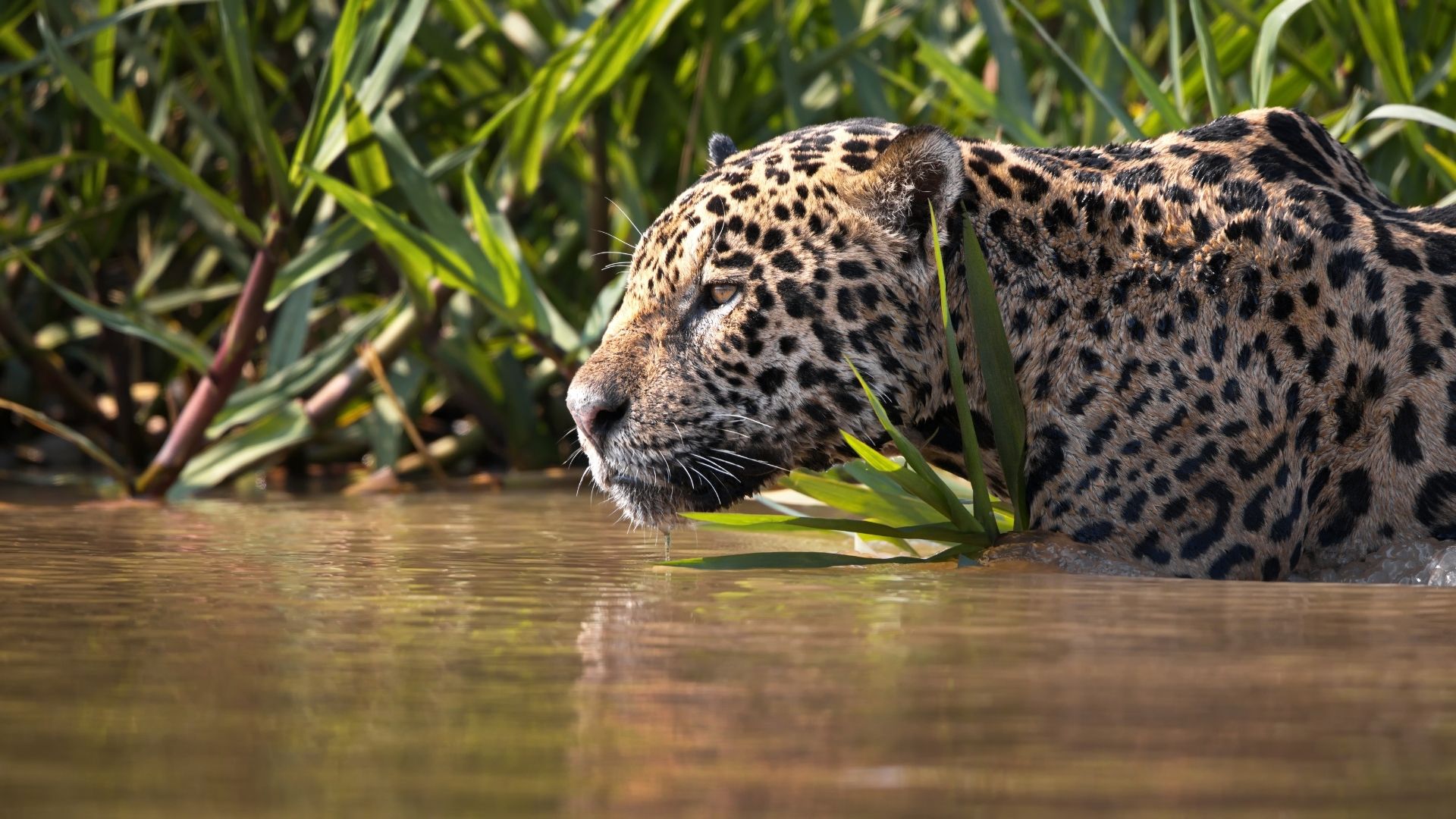
Jaguars
Chaco Jaguar Conservation Project
Gran Chaco, South America

Fishing cats
Fishing Cat Conservation Program
Bangladesh & Sri Lanka

Dholes
Dhole Conservation Program
India
Who we are
S.P.E.C.I.E.S. is an international league of local communities, biologists, and leaders protecting endangered carnivore species, their habitats, and the human communities that share their home.
Species Stewards are the people that make our impact possible — you.
Explore our founder's work
Our team has published over 500+ papers under the supervision of our founder, Dr. Anthony J. Giordano.
Our Programs
Coming soon
Project Neofelis
Fishing Cat Conservation Program
Dhole Conservation Program
ALERIS
Kenya Carnivores Program
Maned Wolf Conservation Program
S.P.E.C.I.E.S. Mexico
+ more
Join us in the field
Join us on our newly launched wildlife conservation expeditions to:
→ Help jaguars in Brazil
→ Search for snow leopards in the Himalayas→
→ Join us on a private Namibian Expedition
© 2026 SPECIES Stewards. All rights reserved.
Website designed & developed by